Pocket Ninja Journal
Word Search: How It Works and What It's Called
· 6 min read
Short answer: a word search is a grid of letters with a list of words hidden in straight lines inside it, and the quickest way to solve one is to stop looking for words. Look for single rare letters instead, then follow their neighbours.
What a word search actually is
The puzzle is simple enough that it barely needs rules: a rectangle of letters, a list of words, and the promise that every word on the list is in there somewhere. In the classic newspaper version each word runs in a straight line — left to right, top to bottom, diagonally, and in harder grids backwards as well. The letters that are not part of any answer are filler.
That filler is where a puzzle is made or ruined. Random letters look wrong, because real text has far more E, A and S than X or Q, and the eye notices. A well-built grid seeds its filler with the same letter frequencies as the language it is written in, which is also why a good word search briefly shows you words that are not on the list.
How to solve one faster
Most people read a word search the way they read a page: left to right, looking for the whole word. That is the slow way, because it asks your eye to match a long shape. These four habits are faster:
- Hunt the rarest letter. For CHOCOLATE, look for H. For QUARTZ, look for Q. There will be a handful of them in the grid rather than dozens.
- Check the eight neighbours. Found the letter? Glance at the squares around it for the second letter. A hit tells you the direction; a miss costs one second.
- Sweep one direction at a time. Read the grid column by column for a minute, then row by row. A single-minded sweep beats wandering.
- Save the long words for last. They take the most room and become obvious as the grid fills up with circles.
Backwards words are the usual sticking point. If a word will not appear, read your sweep in reverse for a moment: many grids hide exactly one or two answers that way, precisely because most solvers never look.
What it is called around the world
The puzzle travelled further than its name did. If you are searching for one in another language, these are the words to use:
| Language | What people call it |
|---|---|
| English (US) | Word search, word find, word seek |
| English (UK) | Wordsearch, word search |
| Swedish | Ordsök, sökord |
| Danish | Ordsøgning |
| Dutch | Woordzoeker |
| German | Wortsuche, Suchsel |
| French | Mots mêlés (France), mots cachés and mot mystère (Quebec) |
| Spanish | Sopa de letras, pupiletras (Peru) |
The Spanish name is the most charming of them: sopa de letras, letter soup. The German Suchsel is a schoolroom word, coined from suchen and Rätsel, and it usually means a grid a teacher built around a lesson's vocabulary.
The app descendants
On a phone the fixed grid gave way to a family of puzzles that keep the word-list idea and change everything else:
- Straight-line word searches. The paper puzzle, digitised: same grid, same rules, with a highlight instead of a pen.
- Touching-letter hunts. Words bend around corners as long as each letter touches the next. Some give you a list to find; others, like a timed letter grid, ask you to find whatever you can.
- Boards that move. Once a word is taken, its letters leave the board and the rest settle into the space. The grid you finish on is never the grid you started with.
The trade is the same in each case: the classic grid is calm and completely predictable, while the moving boards ask you to keep re-reading the same letters in a new arrangement. Which one is better depends entirely on whether you find that annoying or interesting.
Where Inkwell fits
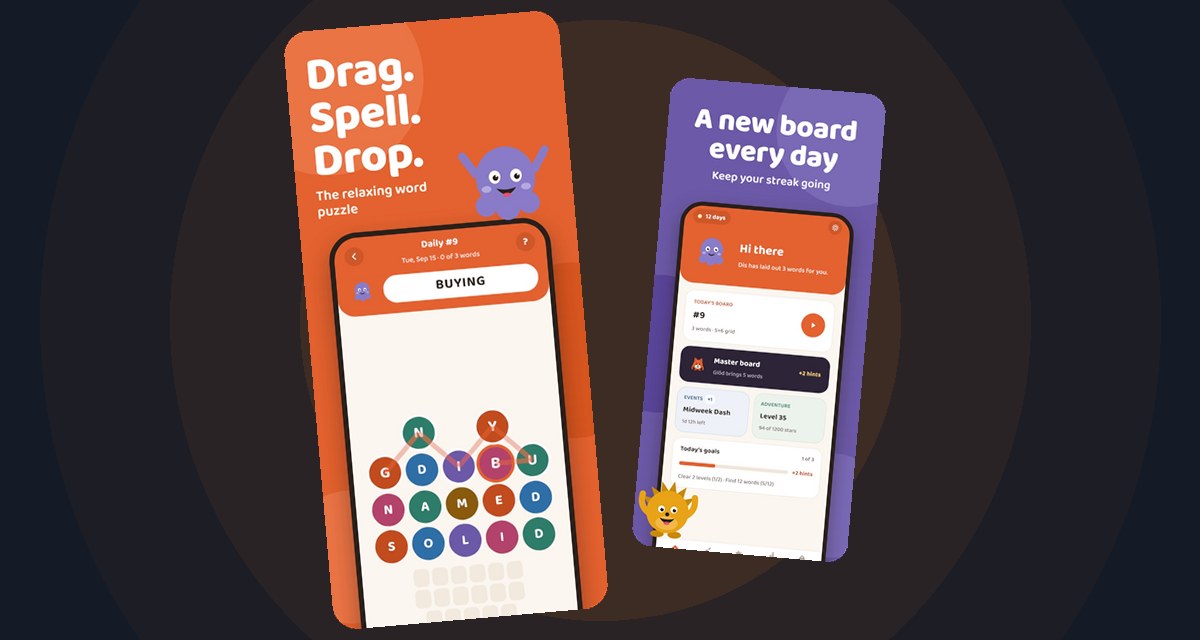
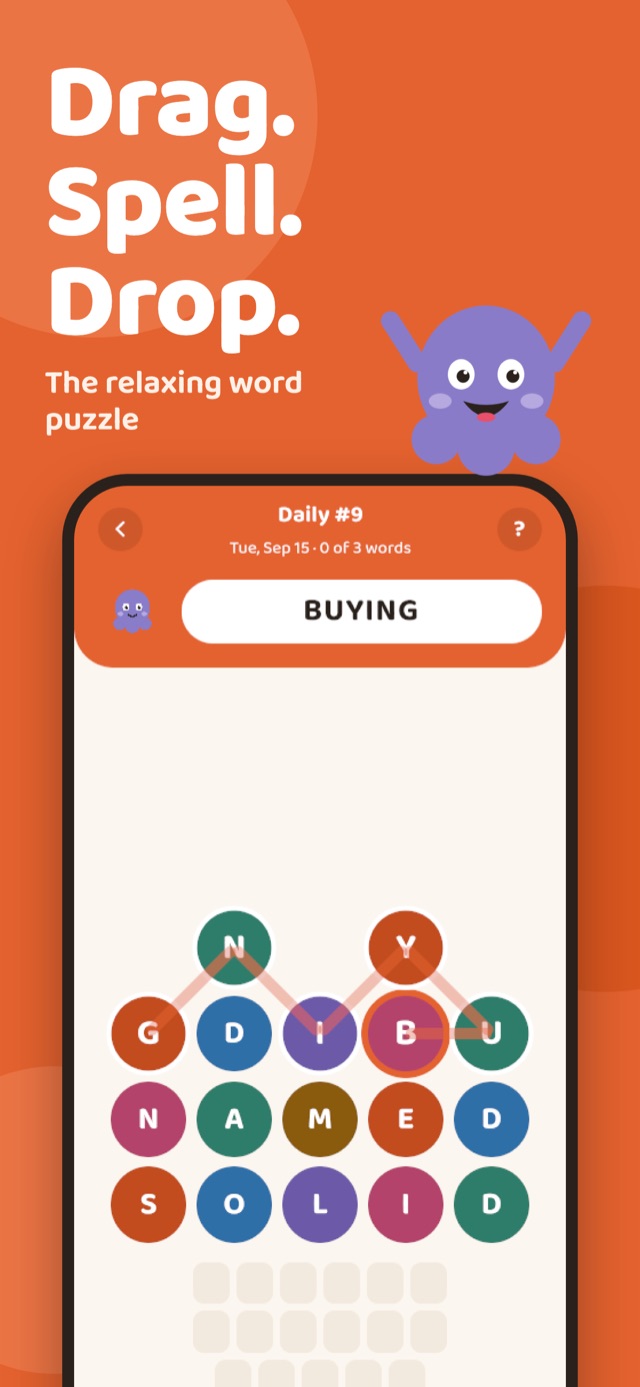
We make Inkwell Word Puzzle, which came out on the App Store in September 2026, so treat this section as a description of our own game. It keeps the part of a word search that makes it restful — a list of words, no clock, no score and no lives — and drops the fixed grid. The letters sit in a stack of bubbles; you drag across bubbles that touch, diagonals included; and when a word is found its bubbles pop and everything above falls into the gap.
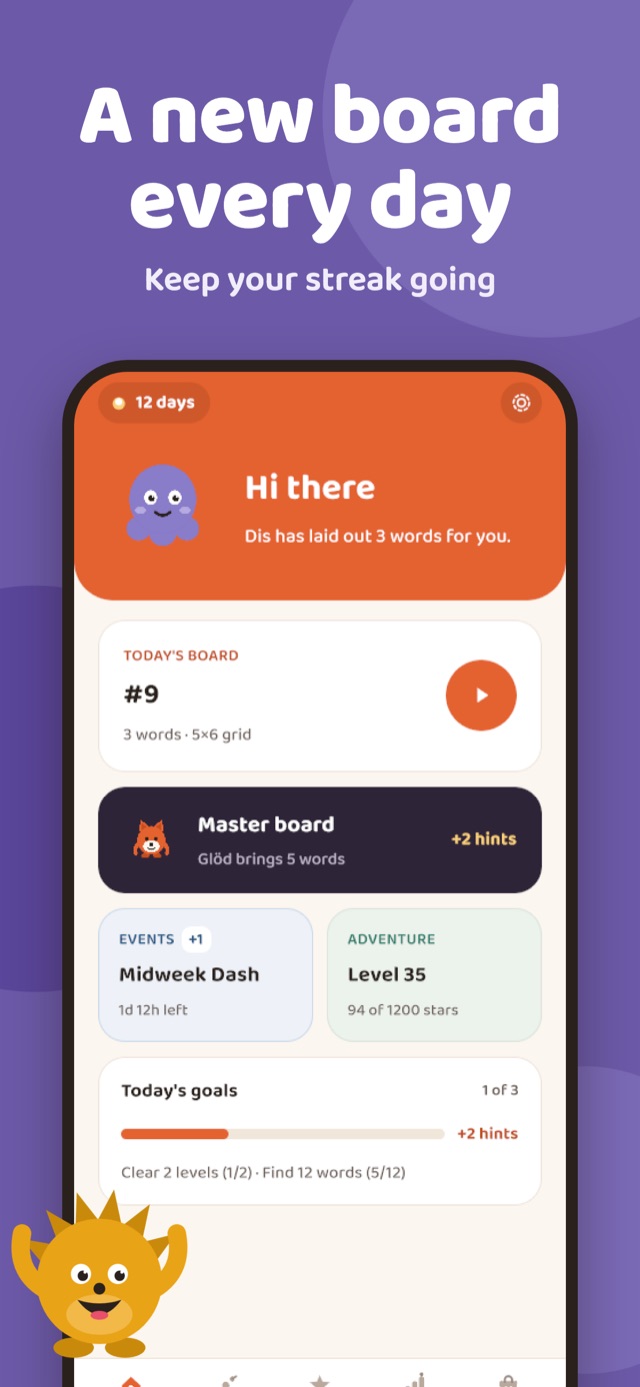
A board can never dead-end: if none of the remaining words can still be traced, the letters rearrange themselves into a layout that can be solved. There is a new board every day, gentle on Monday and longest at the weekend, with a harder Master board beside it, and each one is built on the phone from the word list of the language you are playing in — so it needs no connection, and Swedish players get Swedish boards rather than translated ones.
Inkwell Word Puzzle
A calm word puzzle for iPhone: a board every day, a 400-level adventure, no clock and no lives. Free on the App Store, no account, plays offline.

Frequently asked
What is a word search puzzle?
A grid of letters with a list of words hidden inside it. In the classic version the words run in straight lines — across, down, diagonally, and often backwards — and you circle each one as you find it. The letters that are not part of a word are filler, chosen to look plausible.
What is the fastest way to find words in a word search?
Hunt letters, not words. Pick the rarest letter in the word you are looking for — J, Q, X, Z, K or W in English — and scan for that letter alone, then check its eight neighbours for the second letter. Scanning for a whole word at once is slower, because your eye has to match a shape rather than a single mark.
Are word searches good for anything?
They are a calm, low-stakes way to spend a few minutes, and unlike a crossword they need no general knowledge — only patience and sharp eyes. That is why they turn up in newspapers, classrooms and waiting rooms. We make no claims beyond that: research on puzzles and brain health is far from settled.
What is a word search called in other languages?
Swedish calls it ordsök, Danish ordsøgning, Dutch woordzoeker, German Wortsuche or Suchsel, and Spanish sopa de letras — "letter soup". French has regional names: mots mêlés in France, and mots cachés or mot mystère in Quebec.
Is Inkwell a word search?
It is a descendant of one. Inkwell Word Puzzle gives you a list of words to find, like a word search, but the letters sit in a stack of bubbles instead of a fixed grid, and a word can turn corners as long as each letter touches the next. When you find a word its bubbles pop and the letters above fall into the gap, so the board changes as you solve it.
More reading: every type of word game explained · the daily word games worth your time · the Inkwell game page.