
Pocket Ninja Journal
Wordfly Strategies: Solve the Daily Groups Puzzle in Fewer Mistakes
· 6 min read

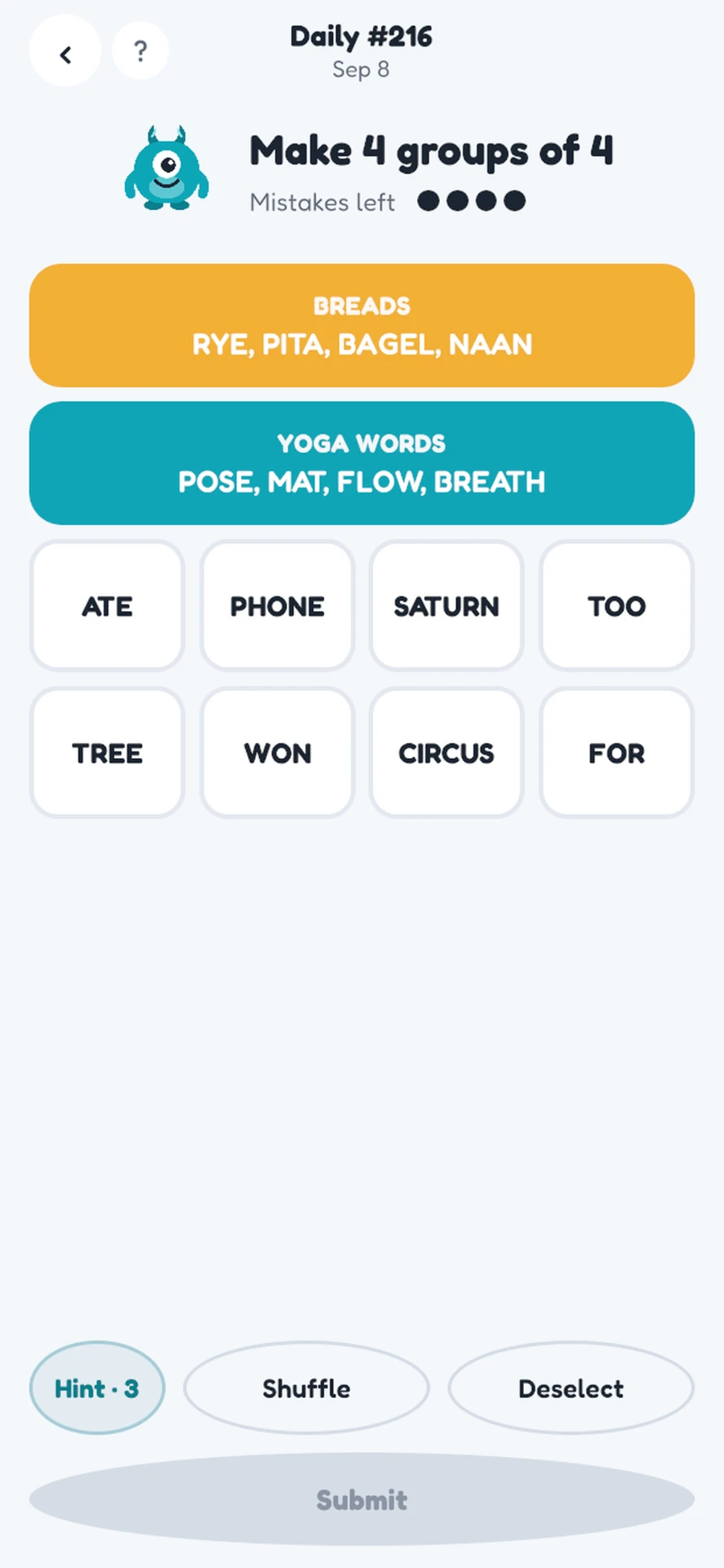
Short answer: solve the group you are most sure of first, and never submit a set just because the four words look related. A careless first guess is the expensive kind: it spends one of your four mistakes and still leaves all sixteen words on the board.
Seven strategies for the daily Groups puzzle
- Read all sixteen words twice before you touch one. The first read finds the obvious group. The second read finds the word that breaks it.
- Count candidates. If five words fit an idea, you have not found the group — you have found the trap. The fifth word belongs somewhere else, and the puzzle is built on it.
- Start with your most certain group, not your first. Certainty beats speed: every correct submission removes four words and simplifies everything left.
- Look for the boring category. Check for a plain group — colours, animals, numbers — and expect at least one of its members to be doing double duty elsewhere.
- Think about word forms, not just meanings. Before you settle on a set, test it for hidden words, shared prefixes, homophones or words that can all precede the same noun.
- Spend mistakes deliberately. You get four. Using one to test a theory early is fine; using three on variations of the same wrong idea is how puzzles end.
- Solve three and stop guessing. The last four words are then the fourth group — you still submit them to win, but the real thinking is only ever three decisions.
Carrying the same thinking into Letter Grid
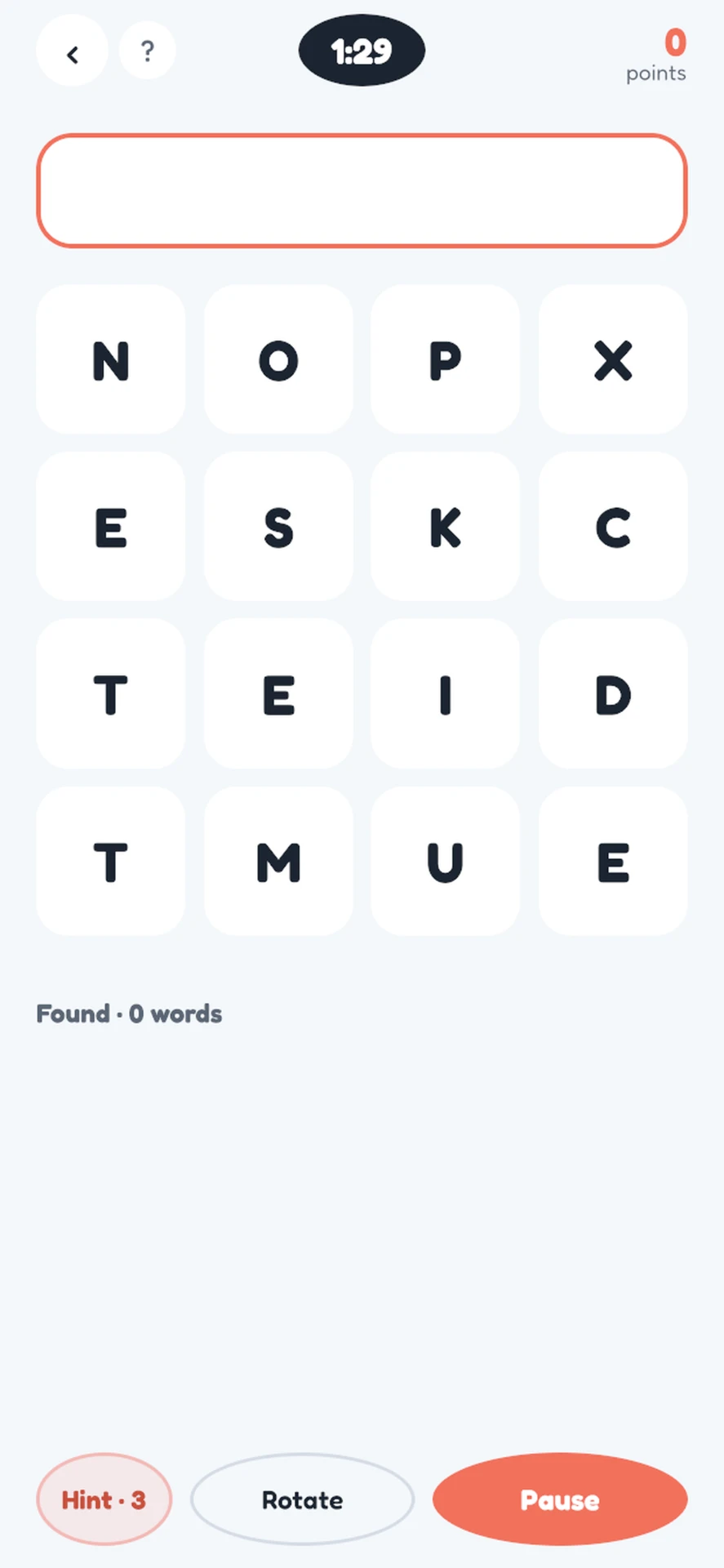
Letter Grid gives you 90 seconds on a 4×4 board where letters connect in any direction, diagonals included. Three habits raise a score fast: sweep for three-letter words first to bank points, then extend them (CAT → CART → CARTS) instead of hunting new starts, and learn the corners — corner letters touch only three neighbours, so words that use them early are usually short.
Tile Board and Word Drop, briefly
In Tile Board you play words from a rack against a target score in limited turns, so the winning habit is holding a high-value letter for one more turn rather than spending it on a three-point word. You also get three swaps per level and up to three stars to earn, and if nothing on the rack can be played it is redrawn for free, so a level can never dead-end. In Word Drop the list tells you exactly what to find, and clearing bubbles drops everything above them into the gap — so take the lowest word you can see first and let the board rearrange itself before you plan the next one.
Wordfly: Daily Word Puzzles
A daily Groups puzzle plus three more word game modes. Free on the App Store, no account, plays offline.

Frequently asked
How many mistakes do you get in a Groups puzzle?
Four. Every wrong set of four words costs one mistake, and the puzzle ends when you run out. Once three groups are solved the last four words are obviously the fourth group, but you still have to submit them — the puzzle is won when all four have been submitted.
What is the fastest way to solve Groups?
Start with the group you are most certain about, not the one you spot first. Read all sixteen words twice before touching anything, and count how many words could belong to each idea — the words that fit two ideas are the trap.
Does a Groups streak reset if I miss a day?
Yes, unless a streak freeze saves it. The last seven daily puzzles stay in the archive for free, and the full archive comes with Wordfly Plus, an auto-renewing subscription you can take monthly or yearly.
More reading: all four Wordfly modes explained · why a short daily habit wins · the game page.