Pocket Ninja Journal
Brick Breaker Explained: How the Ball Physics Actually Work
· 6 min read
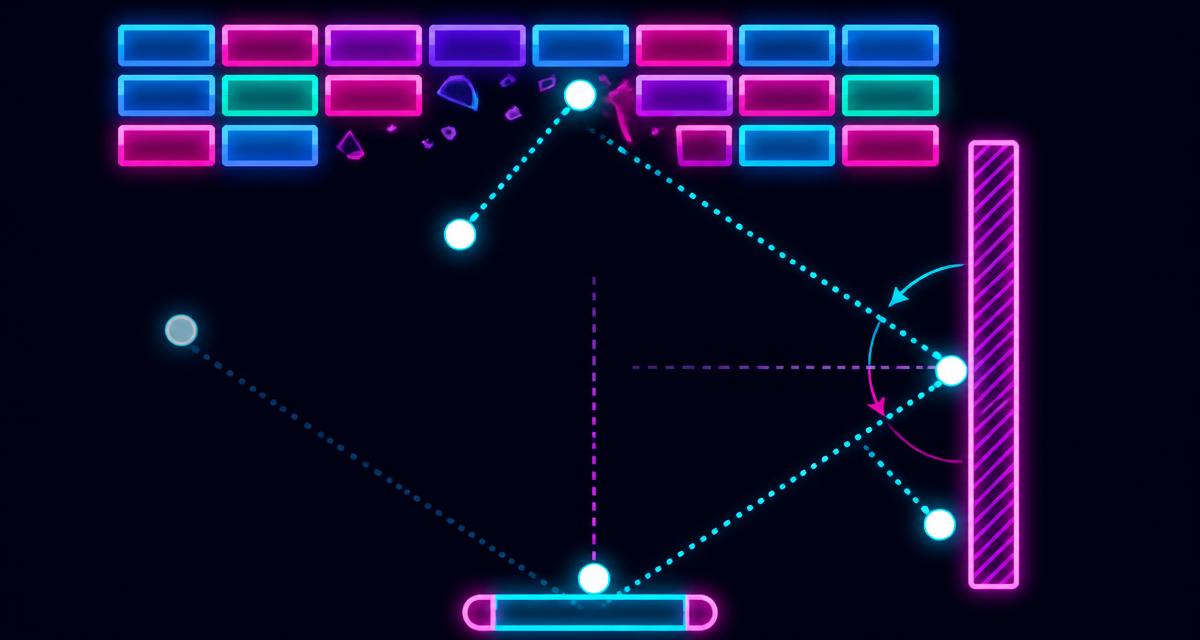
Short answer: the ball leaves a surface at the same angle it arrived, mirrored. Speed does not change. That single rule explains every "lucky" cascade, every wasted shot, and why aiming at the wall beats aiming at the bricks.
Rule one: the angle in equals the angle out
Hit a flat wall at a shallow angle and the ball leaves at the same shallow angle on the other side of the perpendicular. Hit it head-on and it comes straight back at you. In almost every mobile brick breaker the ball's speed is constant — only its direction changes — which means the whole board is predictable if you can picture the mirror.
Bricks obey the same rule, and that is the part players miss: a brick is not just a target, it is another mirror. A ball clipping the underside of a brick keeps travelling sideways; a ball hitting the side of a brick gets sent back down.
Rule two: sideways travel beats upward travel
A ball fired straight up crosses two or three bricks and comes back. A ball fired at a shallow angle into the side wall travels across the board, passing under an entire row. Same ball, same speed, five times the contacts. This is the whole skill of the genre in one sentence.
Rule three: cascades are geometry, not luck
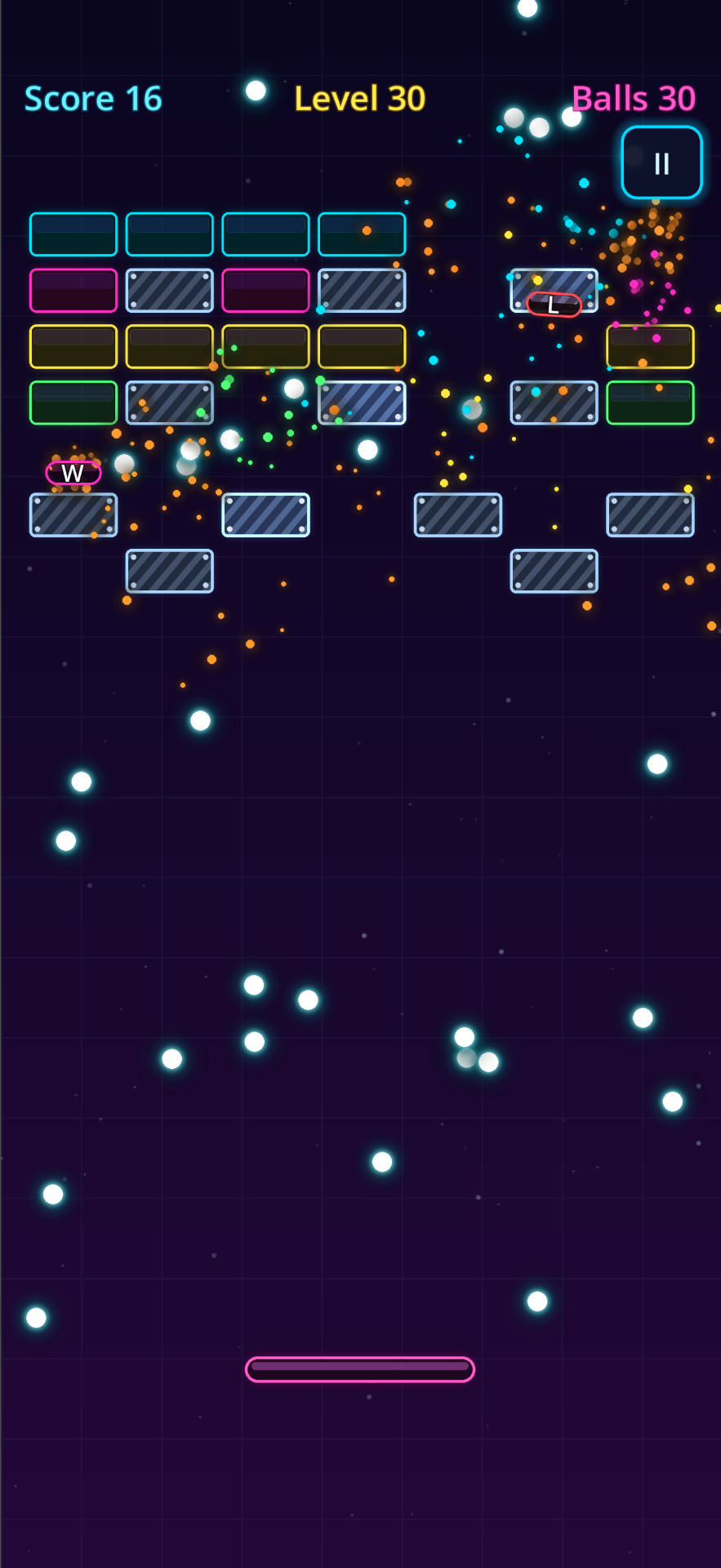
When a shot "goes crazy" it is because the first ball opened a channel. Every brick it cleared removed a mirror, so the balls behind it travel further along the same line and clear more. The cascade is the reward for choosing a line parallel to a row rather than across it.
The three traps
- The corner. A ball wedged into a tight corner bounces between two surfaces and returns with almost nothing. Clear corner bricks early.
- The vertical channel. A gap straight up the middle looks inviting and gives you a single column of hits. It is the worst-value shot on the board.
- The near-flat shot. Too shallow and the ball pinballs along the launcher line without ever reaching the bricks. There is a sweet spot just under the lowest row.
Where power-ups fit the physics
Extra balls multiply everything above — each new ball follows the same channel, so one good line pays out repeatedly. Lasers ignore geometry entirely and are best spent on tall stacks you cannot get an angle on. Bombs are for dense clusters low on the board, where angles have run out and you need space more than points.
Practising the read
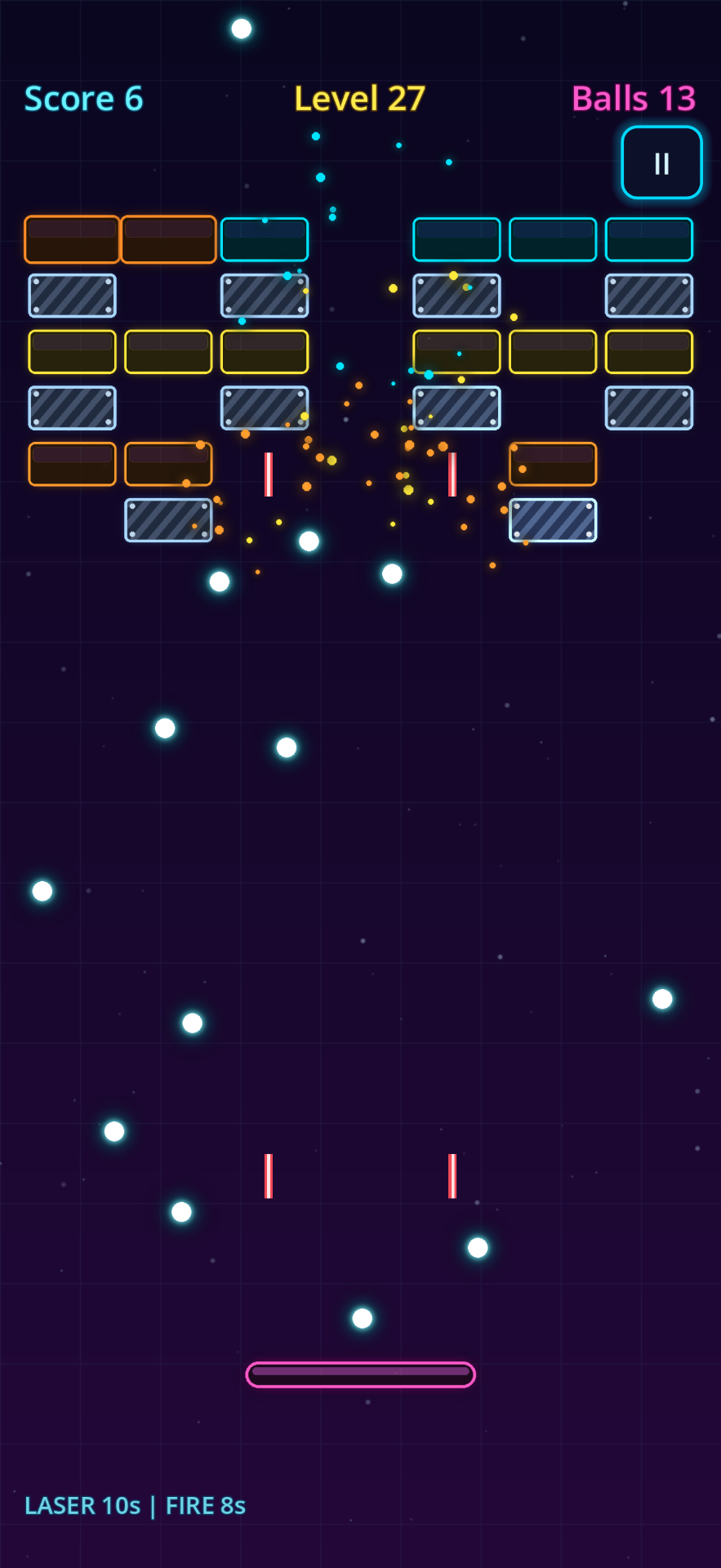
Most games show a dotted line for the first bounce only. Use it as a ruler, not an answer: pick the wall spot you want, let the line confirm it, then mentally mirror the path once more. After a few runs you will see two or three bounces ahead, which is all the foresight the genre actually requires.
Our own take on this is Bounce Em Balls, and the beginner's guide turns these rules into concrete habits.

Bounce Em Balls
A neon brick breaker for iPhone where one good angle cascades into dozens of hits. Free on the App Store, plays offline.

Frequently asked
Does the ball speed up?
In most mobile brick breakers, no. Constant speed is what makes angles learnable.
Is there a single best angle?
A shallow shot into the side wall, just under the lowest brick row, is the highest-value default. Everything else depends on the board.
Why did my shot return instantly?
You almost certainly hit a brick face straight on, or caught a corner.
More reading: Bounce Em Balls beginner's guide · all our apps · Pocket Ninja Games.